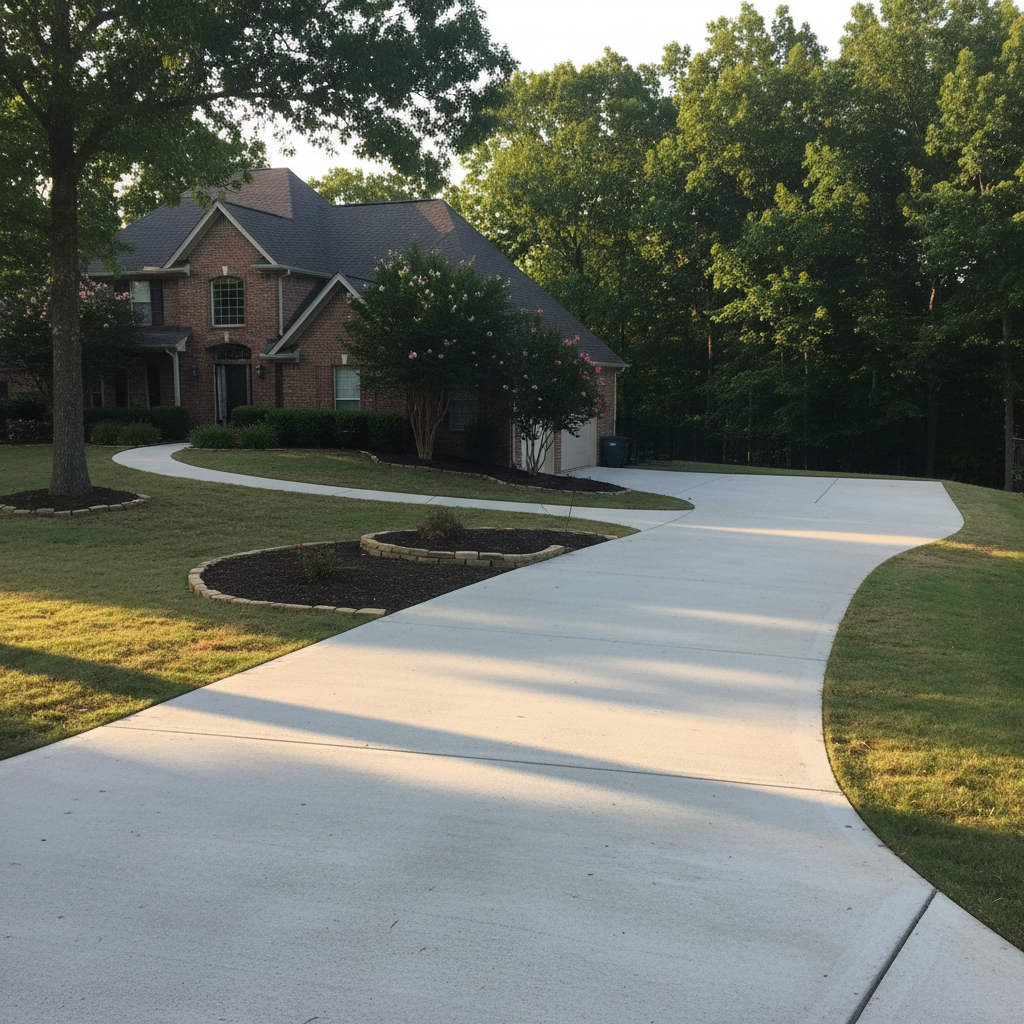
Oklahoma weather keeps us all on our toes. One week we are dealing with a scorching July heatwave, and a few months later an ice storm rolls across Green Country. If you are planning a new patio, driveway, or sidewalk around Broken Arrow, you already know that our local climate demands respect. Concrete is not just poured and forgotten; it is a chemical process sensitive to everything Mother Nature throws at it. Here is what you need to know about timing your projects and keeping your slabs intact through every season.
How the Broken Arrow Climate Affects Fresh Concrete
Our red clay soil and shifting temperatures create unique challenges. Heavy summer heat causes water to evaporate too fast from a fresh pour. When that happens, you get shrinkage cracks and a weak surface. On the flip side, winter freezes can trap moisture inside uncured concrete, causing it to scale or pop apart. We see plenty of subdivisions in areas like Elm Creek or near the Rose District where poor timing led to premature cracking because the mix dried out under a blistering August sun or got caught in a sudden autumn freeze.
Picking the Right Time to Schedule
Spring and fall remain the sweet spots for flatwork and masonry. During April and May, or October and November, the temperatures are moderate enough to let the cement hydrate properly without needing extreme intervention. But life does not always wait for the ideal season. If you need a pour during the dead of summer, at Express Concrete & Masonry Solutions we adjust our schedule to start at dawn, beating the afternoon heat so the mix does not flash-set. Winter pours are totally doable too, as long as we use blankets, heated water, and proper additives to protect the slab until it hits its initial strength.
Protecting Your Investment All Year Long
- Seal your concrete every couple of years to keep out moisture and winter de-icing salts.
- Keep expansion joints clear of dirt and debris so the slab can move naturally with our shifting clay soil.
- Wash away heavy mud and organic stains before they bake into the surface during humid summer stretches.
Taking care of your concrete means understanding how it reacts to our local weather patterns. A little preventative maintenance goes a long way toward making sure your flatwork lasts for decades.