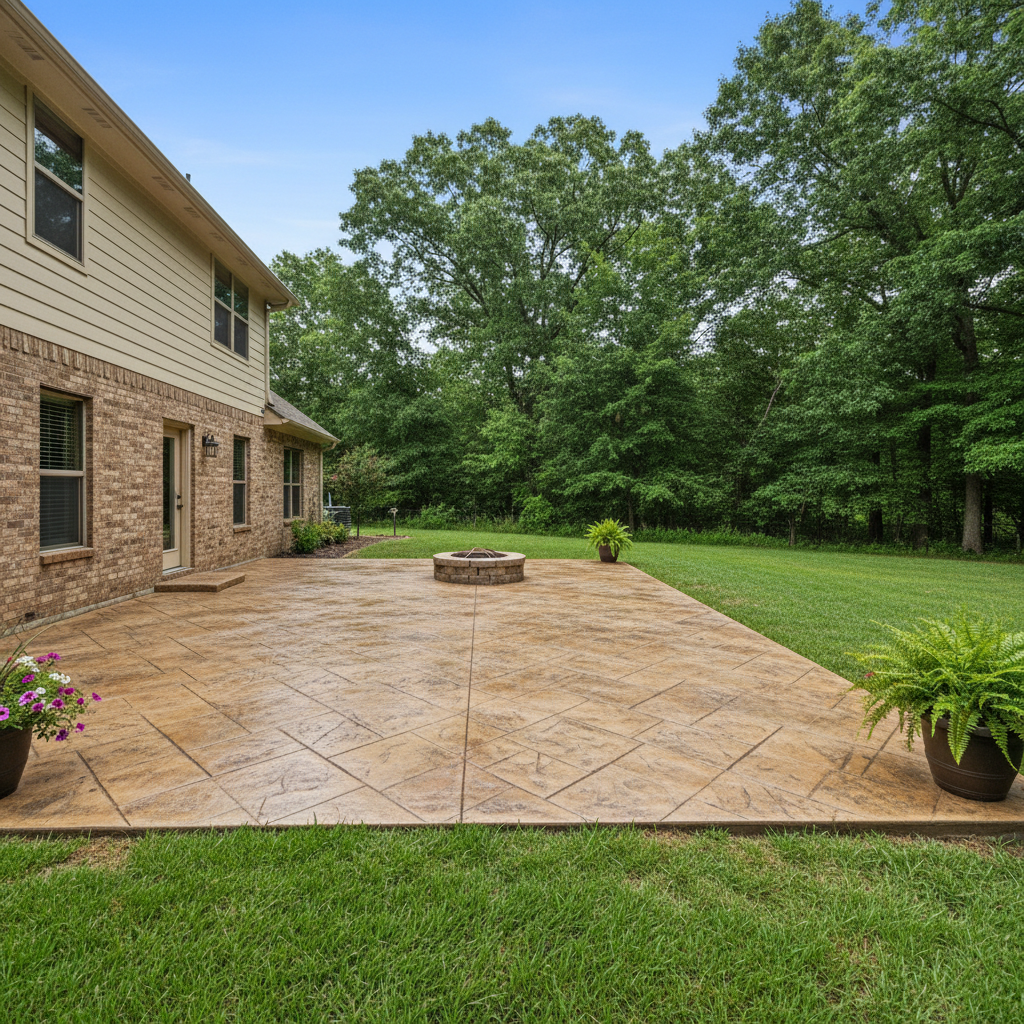
You are looking at Stamped Concrete for your home. This is a smart move. Stamped Concrete is a great way to add curb appeal as well as value to your Broken Arrow home. This is true whether it is a new patio in Aspen Creek or a redesigned driveway near the Rose District. Our Oklahoma weather is not always kind to concrete. This is especially true when it is new. You need to know when to schedule the Stamped Concrete work. You also need to know what conditions matter. You need to know how to keep your Stamped Concrete looking great for many years.
Timing Your Stamped Concrete Project in Broken Arrow
When is the best time to get that beautiful Stamped Concrete installed? It really comes down to hitting the right spot with temperatures as well as moisture. We have some pretty wild swings here in Broken Arrow. These swings go from scorching summers to icy winters.
- Spring (March to May) is usually ideal for Stamped Concrete. The moderate temperatures as well as lower humidity are perfect for concrete to cure properly. You want that concrete to gain strength at a steady pace. It should not be too fast or too slow. Just watch out for those sudden spring showers. A downpour on fresh concrete is not good for a Stamped Concrete project.
- Fall (September to November) is another prime window for Stamped Concrete. Cooler temperatures help prevent rapid evaporation. Rapid evaporation can lead to surface cracking. In addition, you often get more predictable weather than in spring. The ground stays warm enough for good curing. Your Stamped Concrete also has plenty of time to strengthen before winter hits.
- Early Summer (June) can work for Stamped Concrete, but with caution. If spring and fall do not line up for your schedule, early summer is your next best bet. Express Concrete & Masonry Solutions will always aim for early morning pours to avoid the intense midday sun. Extreme heat makes concrete set too fast. This can weaken it as well as cause cracks in your Stamped Concrete.
Weather Conditions That Affect the Stamped Concrete Work
It is not just about the month for your Stamped Concrete project. It is about the daily conditions. When we are planning your Stamped Concrete project, Express Concrete & Masonry Solutions looks at a few key things.
- Temperature: The best temperature for pouring as well as curing concrete is generally between 50°F and 86°F. Anything above that means you risk the concrete drying too fast. This leads to shrinkage cracks as well as weaker concrete. Below 40°F, the curing process slows way down. If it freezes before it gains enough strength, you are looking at serious damage to your Stamped Concrete. Our winters here in Broken Arrow can drop to 27°F in January. Winter pours require special care like heating the ground as well as using curing blankets for the Stamped Concrete.
- Humidity: Broken Arrow can get pretty muggy. This is especially true from June to August. High humidity can slow down drying times. Low humidity combined with high heat and wind can make the surface dry out too fast. This causes plastic shrinkage cracks before the concrete has a chance to develop strength.
- Rain: This one is simple. You cannot pour concrete in the rain. Even a little bit of unexpected moisture can mess with the mix as well as the curing process. This impacts its strength. Express Concrete & Masonry Solutions needs at least 2-3 dry days after a Stamped Concrete pour.
- Wind: Our Oklahoma wind is not just annoying. It can dry out the surface of fresh concrete too quickly. This is especially true on a hot day. This rapid drying leads to surface cracks in the Stamped Concrete. We will use wind barriers if needed to protect your Stamped Concrete investment.
Protecting Your Stamped Concrete Investment Year-Round
Once your beautiful Stamped Concrete is in, you want it to last. Our local Broken Arrow climate, with its intense heat, freeze-thaw cycles, as well as expansive red clay soils, can be tough on concrete. Here is how to protect your Stamped Concrete.
Seal It Up
This is probably the most important thing you can do for your Stamped Concrete. A good quality sealer protects your Stamped Concrete from moisture penetration as well as UV damage as well as stains. We recommend resealing your Stamped Concrete every 2-3 years. The best time to apply sealer is when temperatures are between 50°F and 85°F. There should be no rain in the forecast for at least 24-48 hours. There should also be low humidity.
Watch Out for Winter
Those freeze-thaw cycles we get are brutal for Stamped Concrete. Water gets into the tiny pores of the concrete. It freezes as well as expands. Then it thaws. This creates internal pressure that can lead to cracks as well as spalling, which is surface flaking.
- Avoid de-icing salts: Many common de-icing salts can severely damage concrete. Stick to sand for traction if you need it. You can also use concrete-safe alternatives for your Stamped Concrete.
- Clear snow promptly: Do not let snow sit and melt on your Stamped Concrete. Then do not let it refreeze. Clear it off with a plastic shovel to prevent prolonged moisture exposure to your Stamped Concrete.
- Ensure proper drainage: Make sure water drains away from your Stamped Concrete. It should not drain towards it. Pooling water is an open invitation for freeze-thaw damage to your Stamped Concrete.
Regular Cleaning and Maintenance
Keep your Stamped Concrete clean. Sweep off debris regularly. Wash it with a mild detergent as well as water. This prevents dirt as well as grime from building up. It also prevents it from potentially degrading the sealer or surface over time. If you have a tough stain, talk to Express Concrete & Masonry Solutions. Do this before you use harsh chemicals that could harm the Stamped Concrete finish.
At Express Concrete & Masonry Solutions, we know Broken Arrow concrete. We have seen what our weather can do. We make sure your Stamped Concrete is installed right. We also make sure you know how to care for it. We want your Stamped Concrete investment to look fantastic. We want it to last for decades.