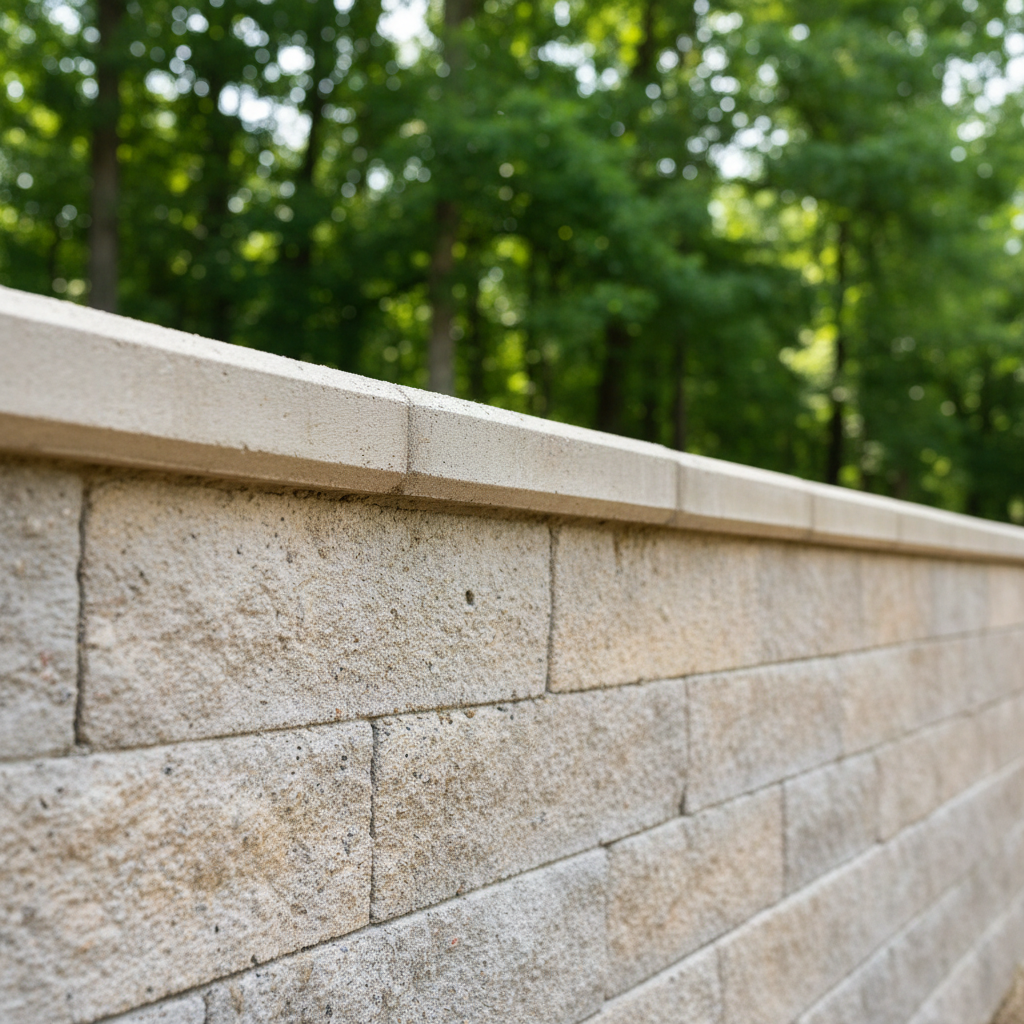
You are looking at your yard and thinking a Concrete Retaining Wall might be the right solution. Maybe you have a sloped area that is eroding. Or you want to create some flat, usable space for a patio or a garden. This is a good idea. Concrete Retaining Walls are not just about looks. They are important for managing soil as well as preventing erosion as well as protecting your foundation. This is especially true here in Broken Arrow where we deal with a lot of clay soil.
As a local contractor, Express Concrete & Masonry Solutions has seen many Concrete Retaining Walls. Some were good and some were bad. We will talk about what you need to know before you even dig that first shovel full of dirt. We will also talk about what happens during the build. In addition, we will discuss how to keep your Concrete Retaining Wall solid for many years to come.
Before You Start: Planning and Permits Are Key
Do not jump into this without a plan. This is the fastest way to end up with a leaning wall and a headache. Here is what you must figure out first for your Concrete Retaining Wall project in Broken Arrow.
- Why do you need it? Is the Concrete Retaining Wall for erosion control? Is it to create a level area? Or is it for both reasons? Knowing the purpose helps Express Concrete & Masonry Solutions determine the right design as well as the right materials for your Concrete Retaining Wall.
- How tall will it be? This is an important consideration for Concrete Retaining Walls in Broken Arrow. In Broken Arrow, any Concrete Retaining Wall over 4 feet in height requires a building permit. If the Concrete Retaining Wall is over 6 feet, you will need a licensed structural engineer to stamp the design. This must happen before you even get that permit. Even Concrete Retaining Walls under 4 feet might need a zoning clearance. So, homeowners should always check with the City of Broken Arrow's Permitting & Licensing office.
- What is your soil like? This is very important for us in Broken Arrow when building a Concrete Retaining Wall. We have mostly clay-based soils here. This means that when the clay soil gets wet, it expands. When it dries, it contracts. This expansion and contraction can put a lot of pressure on a Concrete Retaining Wall. If you do not account for this with proper drainage, your Concrete Retaining Wall will not last.
- Where is the water going? This connects to the soil conditions in Broken Arrow. Water is the number one enemy of a Concrete Retaining Wall. You need a plan to manage surface water as well as groundwater. Homeowners should think about where their downspouts are. They should also think about the slope of their yard as well as any irrigation systems.
DIY or Pro? Here is the Honest Truth
We know you are handy. But some jobs are better left to the pros. For Concrete Retaining Walls, it often depends on the height as well as the complexity of the project.
- Small, decorative walls (under 2 feet): If it is just for a raised garden bed or a small landscape border, you might be able to tackle it yourself. This is true if it is not holding back a lot of slope or a structure. You will save on labor costs. You will also get creative control as well as some serious bragging rights. Just make sure you still think about a solid base as well as some basic drainage for your Concrete Retaining Wall.
- Medium to large walls (2 feet and up): This is where it gets more difficult. Concrete Retaining Walls over 2 feet really need professional expertise. This is especially true for walls holding back a lot of soil or supporting something like a driveway or a foundation. This is because of that expansive clay soil we mentioned earlier in Broken Arrow. There is also the need for proper drainage systems. This includes perforated pipes as well as gravel backfill as well as filter fabric as well as weep holes. There is also the structural engineering required for taller Concrete Retaining Walls. A professional contractor, like us at Express Concrete & Masonry Solutions, understands the local soil conditions. We also understand the building codes. Our team knows how to design a Concrete Retaining Wall that will not fail in a few years. In addition, we have the heavy equipment as well as the know-how to do it right.
A poorly built Concrete Retaining Wall is not just an eyesore in Broken Arrow. It can be a safety hazard. It can also lead to expensive repairs later on. The cost of fixing a failed Concrete Retaining Wall almost always costs more than doing it right the first time.
During the Project: What a Pro Does
If you have decided to bring in the pros for your Concrete Retaining Wall project, here is a look at what goes into a proper installation. For most structural Concrete Retaining Walls in Broken Arrow, you should call us.
- Site Evaluation & Design: Express Concrete & Masonry Solutions will assess your specific property as well as the slope as well as the soil. This includes figuring out the best placement as well as the height as well as the material. Poured concrete is very strong and versatile. Concrete blocks are also a solid choice for a . It is about creating a level, compacted foundation. This foundation must be deep enough to handle the wall's weight. It must also be below the frost line. The frost line is typically 12-18 inches in Oklahoma. It can be deeper for some construction. A good base is usually compacted gravel for a Concrete Retaining Wall. This is often called a French drain. It is surrounded by free-draining gravel backfill. It is also covered with filter fabric to keep soil out. Weep holes are also often put into the Concrete Retaining Wall to let water escape.
- Building the Wall: The Concrete Retaining Wall is built to spec. This is true whether it is poured concrete with rebar reinforcement or interlocking concrete blocks. Our team makes sure of proper alignment as well as structural integrity for your Concrete Retaining Wall.
- Backfilling: The area behind the Concrete Retaining Wall is carefully backfilled. This is often done with more gravel and then native soil. Our team makes sure the drainage system is not compromised. The finished grade should slope away from the Concrete Retaining Wall. This helps direct surface water away from the structure.
After It Is Built: Keeping Your Wall Strong
Once your Concrete Retaining Wall is in place in Broken Arrow, you want it to last. Here is how to keep it in top shape.
- Regular Inspections: Homeowners should look at their Concrete Retaining Wall a few times a year. This is especially important after heavy rains or a wet winter. Look for cracks as well as bulging as well as leaning as well as shifting. If you see any significant movement, call Express Concrete & Masonry Solutions right away.
- Keep Drainage Clear: Make sure those weep holes and any drain outlets are not clogged with dirt or debris. Clear them out if they are blocked. This is important for the health of your Concrete Retaining Wall.
- Manage Vegetation: Roots from plants and trees can cause damage over time. Keep plants and weeds from growing on or too close to the Concrete Retaining Wall. However, healthy grass and plants around the Concrete Retaining Wall can help stabilize the soil.
- Control Water Flow: Make sure your downspouts are directed away from the Concrete Retaining Wall. If your yard slopes towards the Concrete Retaining Wall, consider adding swales or French drains. This will help divert water away from the structure.
- Clean It Up: A good cleaning with a hose or pressure washer can keep your Concrete Retaining Wall looking good. It can also prevent moss or algae buildup. Use caution with pressure washers on some materials. If you see white powdery stuff, which is called efflorescence, a diluted vinegar solution can help clean it.
A well-built and maintained Concrete Retaining Wall is a great investment for your Broken Arrow home. It will protect your property. It will also add value. In addition, it will give you more usable outdoor space. If you are ready to get serious about a Concrete Retaining Wall, give Express Concrete & Masonry Solutions a call. We are here to help you do it right in Broken Arrow.